
Just four days after Dolly Parton’s death, a story that had initially been filled with grief, tributes and memories of an extraordinary life suddenly took a darker and far more disturbing turn.
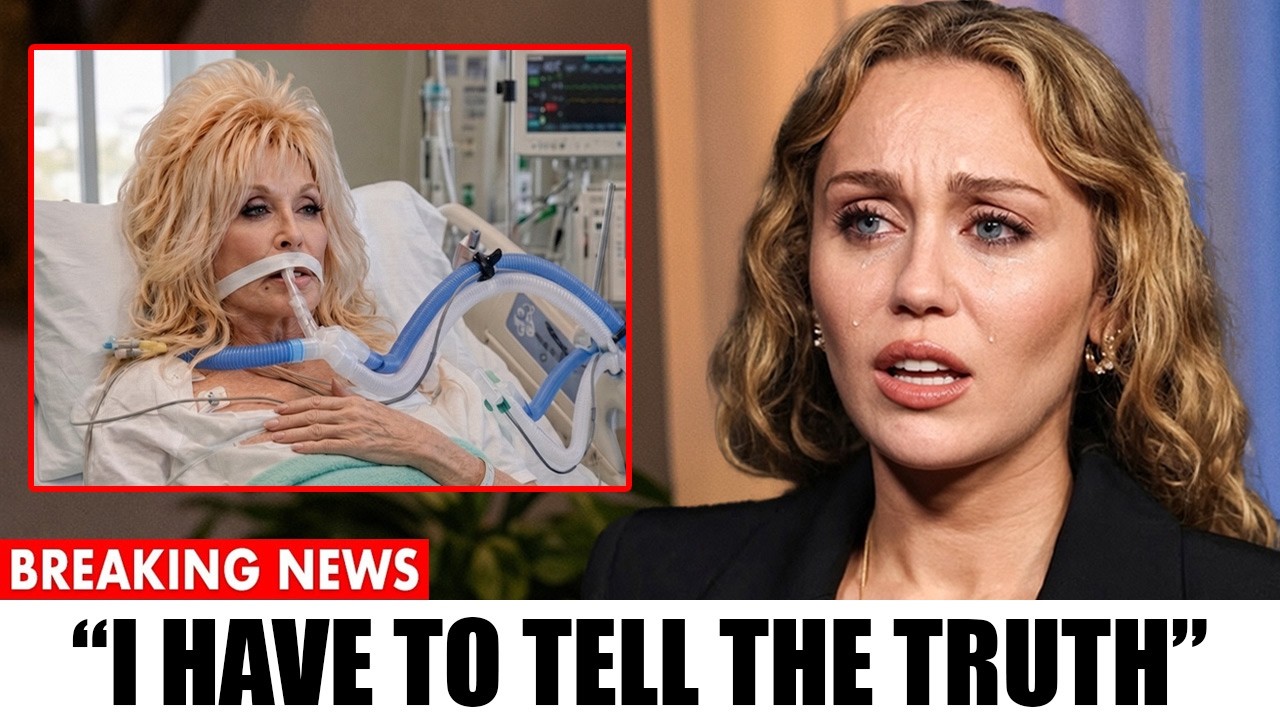
According to the account at the center of the controversy, Miley Cyrus — Dolly’s beloved goddaughter and the woman who had long regarded the country music legend as a second mother — claimed she had been prevented from seeing “Aunt Dolly” during the final stage of her life.
Miley’s grief was already overwhelming.
But now, according to the story, grief had turned into anger.
She alleged that phone calls went unanswered, messages never reached Dolly and visits were тιԍнтly restricted while the singer’s health deteriorated behind closed doors.
Most disturbing of all, Miley suggested that the isolation may not simply have been about Dolly’s health.
She believed money, control and fears surrounding Dolly Parton’s enormous estate may have played a role.
And suddenly, the question surrounding Dolly’s final days was no longer simply how America had lost one of its greatest musical icons.
It became something much more explosive:
Why was one of the people Dolly loved like a daughter allegedly unable to say goodbye?
PART 1 — THE DAUGHTER DOLLY NEVER HAD
Dolly Parton grew up surrounded by family.
She was the fourth of 12 children raised in a modest home in the mountains of Tennessee, where money was scarce but music, storytelling and family ties were everywhere.
Those early years shaped nearly everything Dolly later became.
Her father, Robert Lee Parton, could neither read nor write, but Dolly repeatedly described him as one of the smartest men she had ever known.
His experience later inspired her to establish the Imagination Library, the literacy program that would eventually distribute millions of free books to children.
Her mother, Avie Lee, gave Dolly another lesson she carried throughout her life: remain true to yourself.
Dolly never forgot either parent.
She also remained deeply attached to her brothers, sisters, nieces and nephews, even after becoming one of the most famous entertainers in America.
But there was one dream she never fulfilled.
Dolly never had a biological child.
Yet her life was far from childless.
Among her nieces, nephews and younger relatives, Dolly became a loving and protective presence.
And outside the Parton family, there was one girl who occupied an especially important place in her heart.
Miley Cyrus.
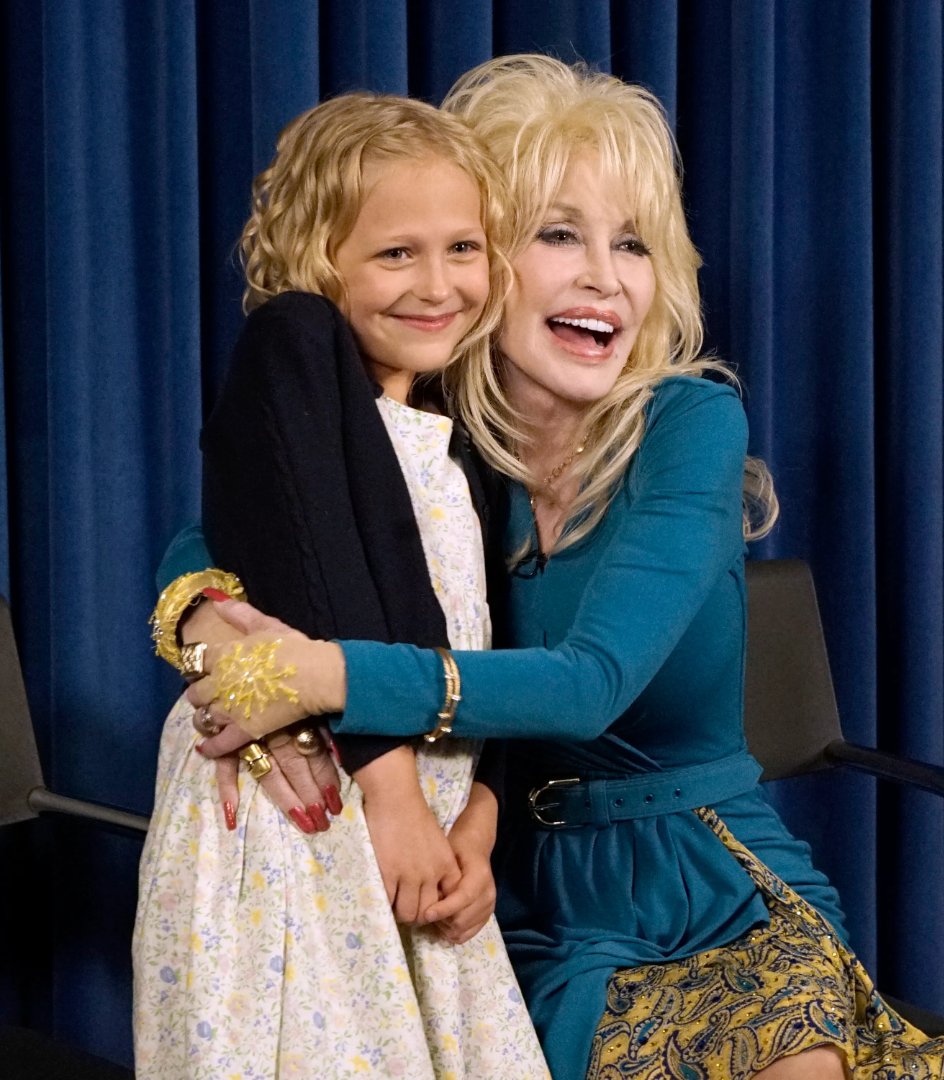
Dolly became Miley’s godmother after developing a friendship with Billy Ray Cyrus.
What began as a symbolic family connection eventually became something much deeper.
Miley called her “Aunt Dolly.”
Dolly watched Miley grow from a child into a Disney star, then into an adult artist whose career repeatedly attracted controversy.
When others criticized Miley, Dolly frequently defended her.
She did not insist that Miley remain the innocent Hannah Montana character the public remembered.
She understood that Miley was trying to discover her own idenтιтy.
Throughout heartbreak, career turmoil and public criticism, Dolly remained an important source of guidance.
When Miley’s life changed dramatically, Dolly was reportedly one of the people she could turn to without fear of judgment.
Their relationship even appeared publicly through performances and Dolly’s appearances on Hannah Montana.
Yet behind those cameras was something considerably more personal.
Miley did not merely see Dolly as a country legend.
She saw family.
That is why what allegedly happened during Dolly’s final days became so painful.
PART 2 — A FINAL GOODBYE MILEY SAYS SHE NEVER GOT
Following Dolly’s death, Miley initially appeared consumed by grief.
The woman who had watched over her for decades was gone.
In the supplied account, Miley remembered Dolly as an almost permanent presence in her life — someone who had been there before fame became complicated and who remained there when life became painful.
She promised to continue making Dolly proud.
But four days later, the tone changed dramatically.
According to the story, Miley spoke publicly about what she believed had happened during Dolly’s final illness.
She claimed she had repeatedly attempted to reach her godmother but was unable to do so.
Calls, she alleged, were blocked.
Messages went unanswered.
Attempts to visit were denied.
Miley said she had effectively been cut off from a woman she loved as family.
The account goes further.
Dolly was allegedly living under extremely restrictive conditions inside her Nashville home.
Visits reportedly required approval.
Longtime household employees were said to have been replaced.
Communication with old friends was allegedly restricted or monitored.
Even Dolly’s ability to step outside was described as limited.
For Miley, the situation appeared unbearable.
According to the story, one of the last things Dolly told her was a simple reminder that she would always love her.
Miley reportedly never forgot it.
But she also could not accept that those words might become their final exchange.
Her anguish centered on one devastating fact:
She had wanted one more visit.
One more conversation.
One last chance to hold Dolly’s hand.
She never got it.
PART 3 — THE CLAIM THAT TURNED GRIEF INTO OUTRAGE
Then came the most serious allegation.
According to Miley’s account in the supplied narrative, Dolly’s health had been deteriorating significantly while she remained at home.
Miley alleged that Dolly was not taken for more intensive hospital treatment early enough.
As her condition became more serious, Dolly reportedly suffered increasing pain, weakness and breathing difficulties.
Eventually, according to the story, she was taken to Vanderbilt-Ingram Cancer Center in critical condition.
By then, Miley believed valuable time had already been lost.
But Miley’s anger did not stop with medical decisions.
She allegedly questioned the motive behind the restrictions surrounding Dolly.
And this was where the story exploded.
Miley suggested that relatives may have feared Dolly could meet with lawyers, reconsider her estate arrangements or change provisions involving the enormous fortune she would leave behind.
The supplied account depicts Miley making clear that she did not care about receiving Dolly’s money.
What she wanted, she said, was something infinitely simpler:
One final hug.
That distinction became the emotional center of her allegations.
To Miley, this was not a battle over millions of dollars.
It was about access to a dying woman she considered family.
The source narrative goes even further, alleging that Miley believed Dolly’s isolation and emotional distress may themselves have worsened her condition.
Miley also recalled that Dolly had supposedly expressed one heartbreaking final wish: to go outside, look across the green landscape and watch another sunset.
According to the account, that request was denied.
For a woman who had spent a lifetime writing songs about freedom, love and home, the image was devastating.
A global superstar surrounded by trophies and memories — but allegedly unable to make one simple choice about how she wanted to spend her remaining days.
The source further ties Miley’s anger directly to concerns about Dolly’s estate, portraying her as believing that тιԍнтer control over Dolly also meant тιԍнтer control over decisions that might affect inheritance.
These remain allegations within the supplied story, not independently established facts.
But inside the narrative, they completely transform what had initially appeared to be a peaceful final chapter.
PART 4 — MONEY, FAMILY AND THE QUESTION THAT WON’T GO AWAY
Before the controversy erupted, Dolly’s final arrangements appeared consistent with the private person behind her enormous public image.
According to the account, Dolly wanted a small funeral attended by close family rather than an elaborate celebrity memorial.
Music would still be there.
“I Will Always Love You,” performed by Whitney Houston, was reportedly chosen alongside the hymn “If We Never Meet Again,” a song ᴀssociated with Dolly’s father.
She wanted a simple white cotton dress.
And, in unmistakably Dolly fashion, high heels.
Her burial was planned beside Carl Dean, the husband with whom she had shared nearly six decades of marriage before his death in 2025.
It should have been the final chapter of a remarkable love story.
Instead, Miley’s allegations created an entirely different conversation.
Was Dolly protected during her final days?
Or controlled?
Were strict visitation rules genuinely intended to safeguard a seriously ill woman?
Or, as Miley allegedly feared, was something else happening behind those closed doors?
And what role, if any, did Dolly’s wealth play?
The supplied story says Dolly’s family had not publicly responded to Miley’s allegations at that point.
That silence leaves the narrative suspended between heartbreak and suspicion.
But one thing remains unchanged.
Dolly Parton’s relationship with Miley Cyrus was never defined by biology.
Dolly had not given birth to Miley.
She did not need to.
For decades, she encouraged her, defended her, performed beside her and helped guide her through some of the most turbulent moments of her life.
Miley, in return, loved Dolly not simply as an icon but as Aunt Dolly.
That is what makes the alleged final separation so painful.
Whatever questions remain surrounding Dolly’s last days, Miley’s anguish in this account is ultimately rooted in something far more personal than money.
She wanted to say goodbye.
She wanted to tell Dolly she loved her.
And she wanted the woman who had spent decades protecting her to know that, when the end came, Miley was still trying to reach her.
Now the music legend is gone.
The accusations remain unresolved.
And one haunting question hangs over the extraordinary bond Dolly Parton and Miley Cyrus shared for decades:
How could two people who loved each other so deeply allegedly be kept apart when they needed each other most?