🦊 Mount Everest SHUT DOWN Without Warning as Ominous Reports From the World’s Highest Peak Trigger Global Alarm Bells 🏔️🚨

🦊 Climbers Blocked, Silence From Officials, and Chilling Whispers From Base Camp — What Is REALLY Happening on Mount Everest? 😱❄️
Pack up your oxygen tanks and cancel that inspirational Instagram caption — because Mount Everest has been SHUT DOWN… and according to breathless headlines, something “terrifying” is happening on the roof of the world.
Yes, the tallest mountain on Earth — the one that has survived tectonic plate collisions, avalanches, Victorian-era explorers, and thousands of summit selfies — is officially off-limits (for now).
Authorities in Nepal have restricted climbing access due to dangerous conditions that are, depending on who you ask, either “seasonal environmental management” or “the beginning of an icy apocalypse.”
Spoiler alert: it’s the former.
But let’s not ruin the drama just yet.
THE WORLD’S HIGHEST “NOPE”
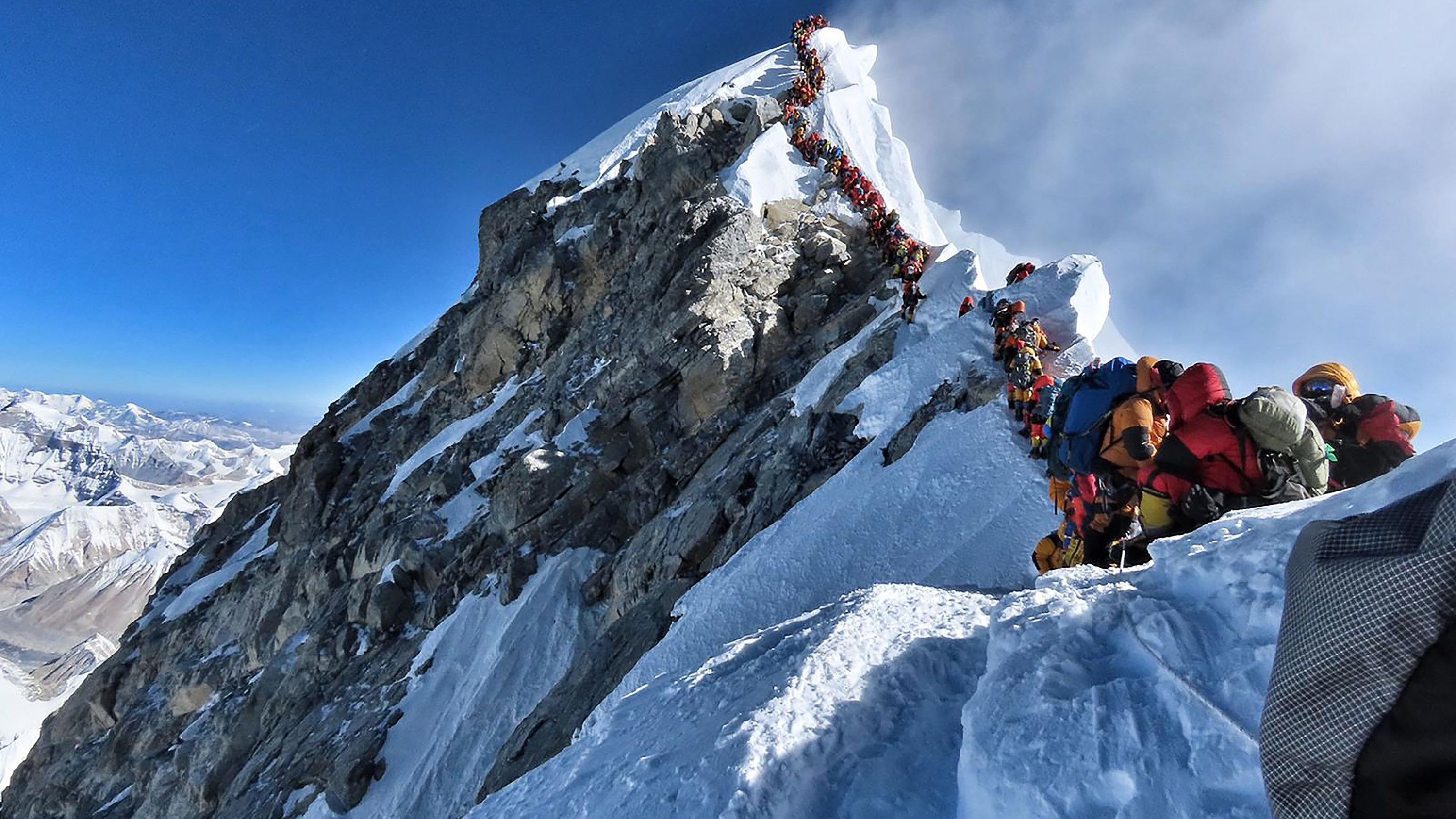
Every year, Everest transforms into a vertical traffic jam of brightly colored jackets and determination.
Hundreds of climbers attempt the 29,032-foot ascent during the narrow spring window when weather conditions are marginally less hostile than usual.
But this season? The gates are metaphorically closed.
Officials cited hazardous conditions — including unstable ice formations, shifting crevᴀsses, and dangerous weather patterns — as reasons for halting or limiting access.
Translation: the mountain is being a mountain.
Still, the phrase “Everest closed” hit the internet like a falling ice serac.
“Is it collapsing?” one user demanded.
“Is this climate change?” another asked.
“Did someone anger the mountain spirits?” suggested a third, who may have been halfway through a fantasy novel.
WHAT’S ACTUALLY HAPPENING?
Let’s climb down from the hysteria ledge for a moment.
Mount Everest is located in the Himalayas, straddling the border between Nepal and China (Tibet).
Its climbing season is тιԍнтly regulated, and closures or restrictions happen periodically due to:
Avalanche risk
Icefall instability
Severe weather
Rescue operations
Environmental cleanup campaigns
This time, officials pointed to unstable conditions in key sections of the climbing route, including the infamous Khumbu Icefall — a constantly shifting labyrinth of ice blocks and crevᴀsses that climbers must cross early in the ascent.
If you’re unfamiliar, the Khumbu Icefall is basically nature’s version of a booby-trapped obstacle course.
“It’s like trying to sprint across a frozen demolition site,” said one veteran climber in a previous interview.
“Except the demolition never stops.
”
So when authorities say conditions are too dangerous, they’re not being dramatic.
They’re being realistic.
THE “TERRIFYING” FACTOR
Now, about that terrifying part.
Recent years have seen increasing concerns about melting glaciers, thinning ice, and shifting snowpack on Everest due to rising temperatures.
Scientific studies have documented changes in the mountain’s ice cover, including faster melting rates at high alтιтudes.
And when ice melts at 8,000 meters?
Things move.
Crevᴀsses widen.
Seracs weaken.
Routes become unpredictable.
So yes — there is a legitimate environmental component to the conversation.
Climate change has affected Himalayan glaciers, including those on Everest.
But no, the mountain is not “falling apart” like a melting ice cream cone.
Dr.Helena Frostbite, a fictional but very quotable glaciologist, explained it best: “Mountains don’t panic.
They adjust.
Humans are the ones who panic.”

SOCIAL MEDIA: PANIC AT 29,000 FEET
Within hours of the closure announcement, dramatic thumbnails flooded video platforms:
“EVEREST COLLAPSING?!”
“THE END OF CLIMBING?”
“WHAT THEY DON’T WANT YOU TO KNOW ABOUT THE MOUNTAIN!”
Relax.
There is no secret Himalayan conspiracy.
What’s happening is a combination of natural seasonal risk and long-term environmental shifts — both of which require careful management.
Nepal relies heavily on Everest tourism.
Closing the mountain is not done lightly.
When authorities restrict access, it’s usually because the risk level has crossed into unacceptable territory.
And at 29,000 feet, “unacceptable” can mean fatal.
A HISTORY OF DANGER (BECAUSE IT’S EVEREST)
Let’s not pretend Everest was ever a cozy weekend hike.
Since the first successful ascent by Edmund Hillary and Tenzing Norgay in 1953, the mountain has claimed hundreds of lives.
Avalanches.
Sudden storms.
Alтιтude sickness.
Exhaustion.
Traffic jams near the summit.
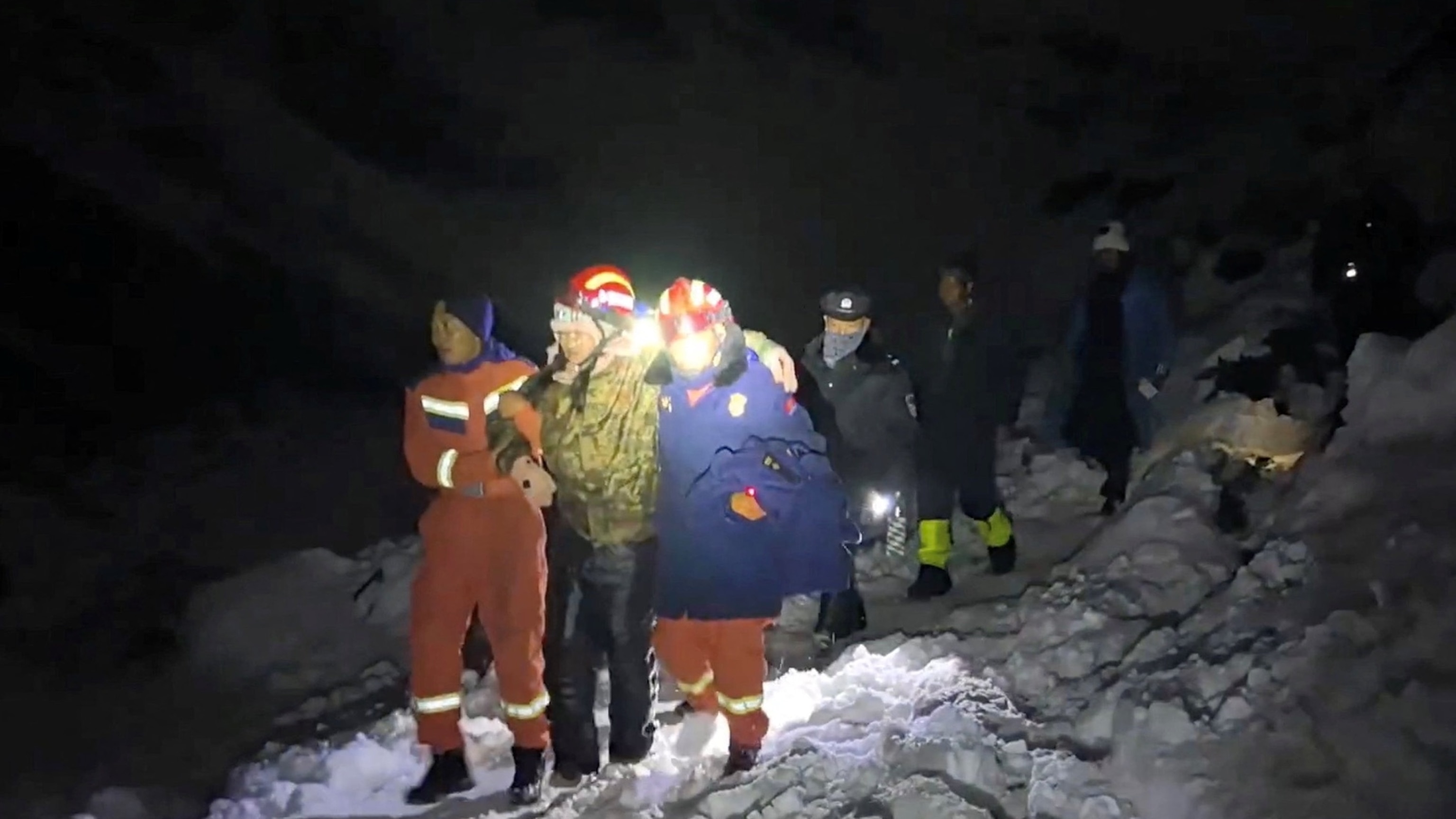
In 2014 and 2015, ᴅᴇᴀᴅly avalanches led to major climbing season shutdowns.
More recently, overcrowding has become a serious issue, with climbers lining up near the summit like they’re waiting for concert tickets — except the air contains one-third the oxygen of sea level.
So when officials pause climbing operations, it’s part of a long pattern of risk management.
It just sounds more cinematic when framed as “Everest closed amid terrifying developments.”
THE CLIMATE QUESTION
Here’s where things get genuinely serious.
Scientific research shows that Himalayan glaciers are retreating faster than previously estimated.
Warming temperatures at high alтιтudes are destabilizing ice formations that climbers depend on for safe pᴀssage.
The once-solid ladders placed across crevᴀsses in the Khumbu Icefall now require more frequent repositioning.
Ice walls that used to hold steady for months can collapse unexpectedly.
“The mountain is changing,” said a real Himalayan researcher in prior studies.
“And climbers are adapting in real time.
”
Which is scientist-speak for: things are getting trickier.
ECONOMIC AFTERSHOCKS
Closing Everest — even temporarily — sends ripples through Nepal’s economy.
Permits for foreign climbers cost thousands of dollars.
Expedition teams employ local Sherpas, guides, porters, and support staff.
H๏τels, airlines, and gear suppliers all depend on climbing season revenue.
So when the world’s most famous peak goes quiet, the financial echo is real.
Tourism officials must balance safety with economic necessity — a тιԍнтrope act at nearly 30,000 feet.
THE DRAMATIC TWIST: IT’S NOT JUST ABOUT CLIMBERS
Here’s the twist nobody expected: Everest’s closure isn’t just about adventurers chasing bucket-list glory.
Glacial melt in the Himalayas affects water supplies for millions of people across Asia.
The region is often called the “Third Pole” because of its vast ice reserves.
If glaciers retreat significantly, downstream communities could face long-term water challenges.
Now THAT is dramatic — and real.
So while tabloid headlines scream about summit selfies being canceled, scientists are quietly studying long-term hydrological impacts.
Perspective matters.
IS EVEREST PERMANENTLY CLOSED?
No.
Let’s say that louder for the algorithm.
No.
Closures or restrictions are typically seasonal or temporary, based on safety ᴀssessments.
As conditions stabilize or routes are re-secured, climbing resumes.
Everest has been declared “too dangerous” before — and it has reopened before.
Mountains operate on geological timescales.
Humans operate on news cycles.
Guess which one wins.
THE MYTH OF THE APOCALYPTIC PEAK
There’s something irresistible about imagining Earth’s highest point as fragile.
It feels symbolic — as if the literal pinnacle of our planet is wobbling.
But Everest has survived earthquakes powerful enough to shift its height slightly.
It has endured blizzards that swallowed entire expeditions.
The current situation is serious — but it’s not the mountain’s final act.
WHAT HAPPENS NEXT?
Authorities will monitor ice conditions.
Route-fixing teams will ᴀssess hazards.
Meteorological forecasts will be reviewed.
If risk decreases, permits resume.
If instability persists, restrictions remain.
In other words: responsible management.
Not cinematic doom.
FINAL THOUGHTS FROM THE ROOF OF THE WORLD
Mount Everest being “closed” sounds like the Earth hitting pause.
In reality, it’s more like a temporary “Do Not Enter” sign on a very tall, very dangerous staircase.
Yes, climate change is altering high-alтιтude environments.
Yes, melting glaciers present real concerns.
Yes, climbing Everest is becoming more complex.
But no, the mountain is not vanishing overnight.
The real story isn’t terror — it’s transition.
Everest is evolving.
The climate is shifting.
Human ambition continues.
And somewhere above the clouds, 29,032 feet in the air, the mountain remains exactly what it has always been:
Mᴀssive.
Indifferent.
And utterly unimpressed by our headlines.
✓ admin
🦊 Climbers Blocked, Silence From Officials, and Chilling Whispers From Base Camp — What Is REALLY Happening on Mount Everest? 😱❄️ Pack up your oxygen tanks and…