The opening lines arrive with extraordinary restraint, almost as though Miley is afraid that singing too loudly might disturb whatever memories have gathered around a song permanently connected with her legendary godmother.
Thousands of phones remain raised, but surprisingly few people appear to be talking, creating the unusual sight of a mᴀssive crowd choosing silence when almost every modern concert moment seems designed for constant participation.
Then the cameras reveal members of the fictional backing band watching Miley closely, and several musicians appear visibly emotional as the arrangement gradually builds without ever overwhelming the voice at its center.
For longtime fans, the imagined scene would immediately carry enormous significance because Miley has frequently spoken publicly about Dolly’s influence, making any serious musical tribute between them naturally capable of generating powerful emotions.
Yet describing such a performance as a “goodbye” would immediately create controversy, especially because audiences should never interpret an emotional tribute as evidence of someone’s death or private circumstances without verified information.
That distinction matters enormously in celebrity culture, where dramatic captions can travel around the world faster than corrections, sometimes leaving millions believing a tragedy occurred simply because an emotional performance was presented without context.
In this fictional scenario, the power comes from honoring Dolly’s influence while she can still be celebrated, transforming the concept of farewell from literal death into recognition that generations, careers, and relationships inevitably evolve.
Miley reaches the first chorus without adding unnecessary vocal flourishes, allowing the melody to remain recognizable while her rasp gives familiar words an entirely different texture, filled with graтιтude rather than theatrical sadness.
Some audience members begin crying, not necessarily because they believe something tragic has happened, but because the song carries personal memories extending far beyond the two famous women ᴀssociated with the moment.
For one listener, it might recall a parent; for another, a marriage that ended without hatred; for someone else, a person they loved enough to release when remaining together became impossible.
That universality is part of why “I Will Always Love You” has endured, because beneath its extraordinary musical history sits an emotion almost everyone eventually understands: loving someone while accepting that circumstances can still change.
But the imagined performance becomes unmistakably personal when Miley briefly looks upward before the final section, closes her eyes, and allows several seconds of complete silence to remain between the music.

Nobody cheers during the pause, and that restraint becomes almost more powerful than applause because eighty thousand people seem to understand simultaneously that filling every silence would somehow diminish what they are witnessing.
When Miley begins again, her fictional performance grows stronger without becoming polished, and the slight strain in her voice makes the final chorus sound less like entertainment than something she genuinely needs to finish.
Behind her, one musician lowers his head while another wipes at her face, and suddenly cameras capturing the band reveal that the emotional atmosphere extends far beyond the woman holding the microphone.
Social media would explode immediately, with clips receiving millions of views as fans describe the performance as devastating, beautiful, uncomfortable, historic, or one of the most emotionally exposed moments of Miley’s career.
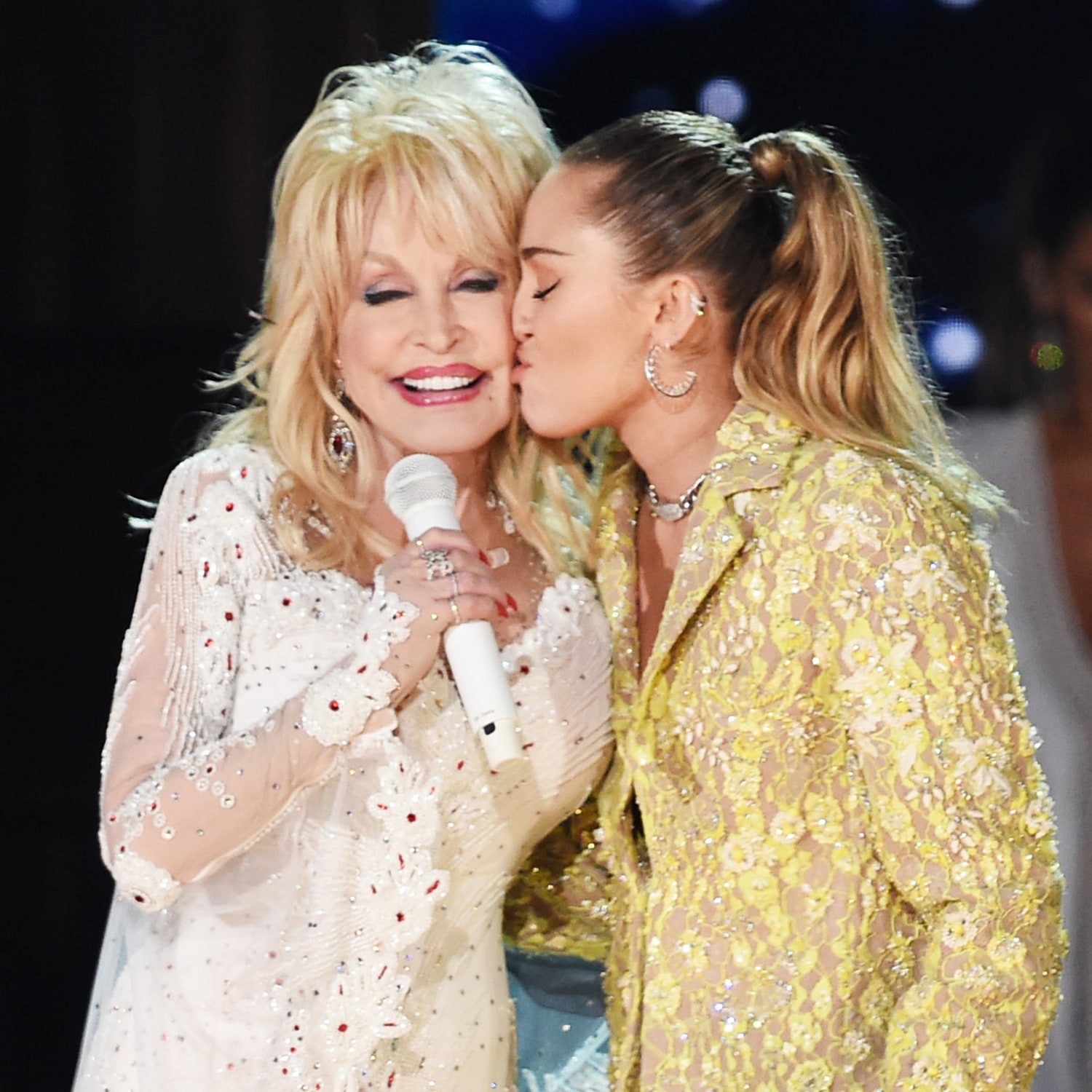
Yet another debate would quickly emerge: should audiences record moments this intimate, or does watching an emotional performance through thousands of phone screens transform something meaningful into another piece of disposable digital content?
Some would argue recordings allow people around the world to experience extraordinary performances they could never attend, preserving musical moments that might otherwise disappear immediately after the final note.
Others would say constant recording changes how audiences experience concerts, replacing memory with documentation and encouraging people to think about tomorrow’s post while something irreplaceable is happening directly in front of them.
The fictional tribute would also reopen conversations about Dolly’s extraordinary songwriting legacy, particularly among younger listeners who primarily ᴀssociate “I Will Always Love You” with later recordings rather than its original writer.

Miley singing it would therefore represent more than affection between godmother and goddaughter, becoming a symbolic bridge between generations of performers whose careers developed inside radically different versions of the music industry.
That connection could explain why the imagined stadium becomes so emotional, because audiences are not simply hearing one famous singer cover another famous singer’s composition; they are watching influence pᴀss visibly between generations.
By the final sustained note, Miley does not attempt to hold the sound indefinitely for applause, instead allowing her voice to fade naturally until the instruments disappear with it.
For several extraordinary seconds afterward, nobody seems certain what to do, and the fictional stadium remains silent while Miley stands completely still beneath the lights, visibly collecting herself before looking toward the audience.
Then everything breaks open at once as tens of thousands rise, applause crashes across the venue, and people who remained silent throughout the song finally release the emotion they had been holding.
Miley places one hand over her heart but offers no long speech, because explaining the performance immediately afterward would almost certainly make something deeply emotional feel smaller than it had moments earlier.
That silence would become the detail fans discuss most intensely, with some interpreting it as overwhelming emotion while others argue that audiences should resist pretending they know precisely what another person’s expression means.
Perhaps that uncertainty is healthier than another manufactured explanation, because relationships as significant as Miley and Dolly’s public bond cannot be summarized accurately through one song, one glance, or one viral clip.
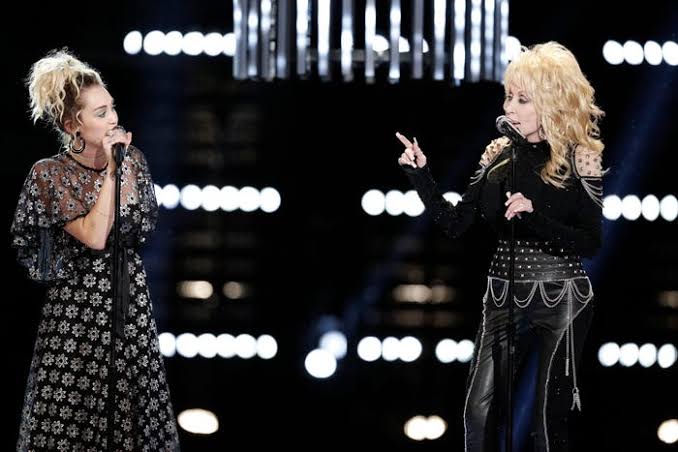
An imagined performance like this does not need tragedy to matter, nor does honoring someone require waiting until their voice exists only through recordings, pH๏τographs, and memories.
Maybe that is the most powerful idea hidden beneath the fictional spectacle: people should hear what they mean to us while they are still able to receive the words.
Because the most meaningful tributes are not necessarily goodbyes, and sometimes eighty thousand people becoming completely silent can communicate something far more enduring than the loudest applause.